
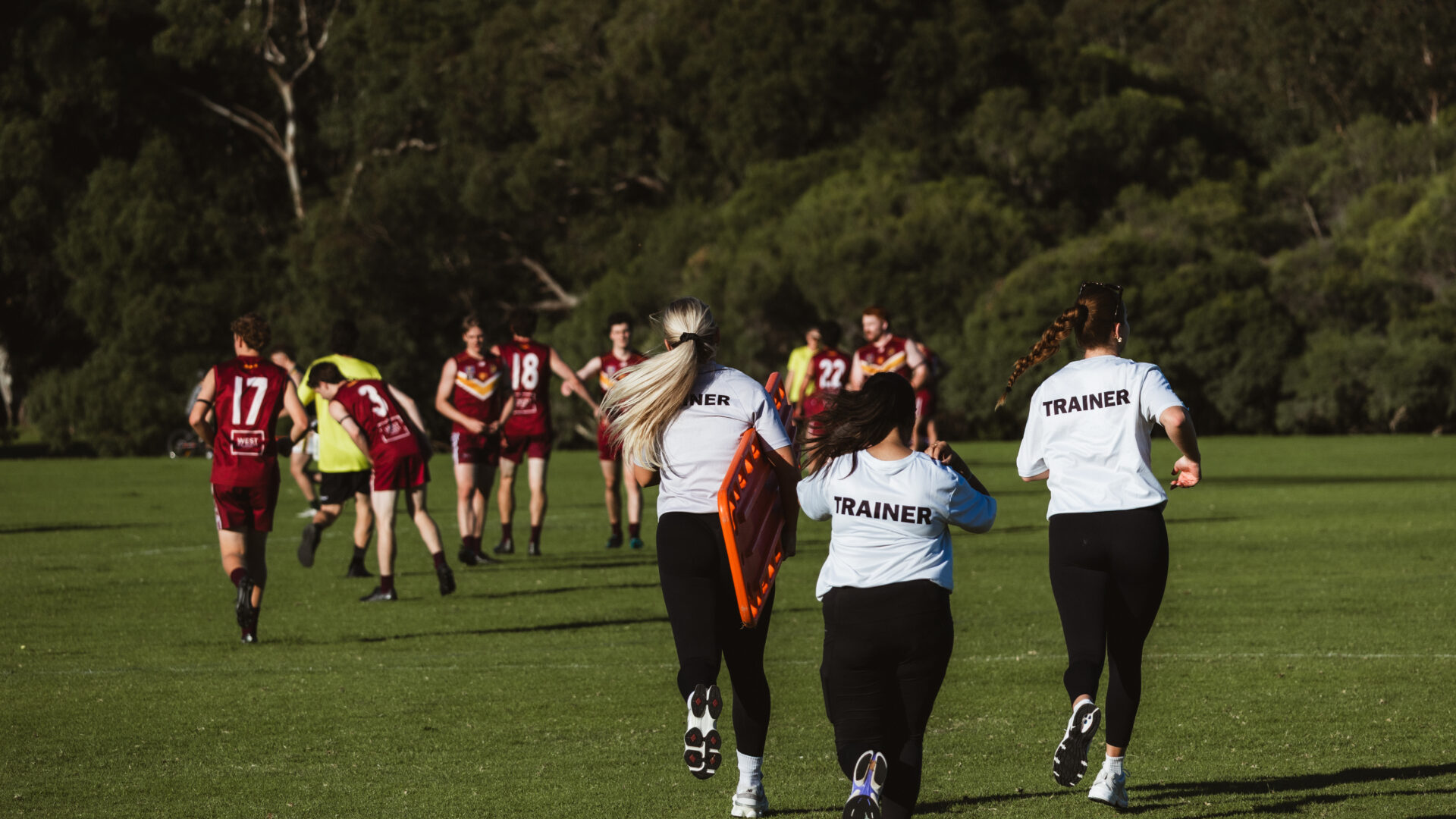
Sports Trainer
Interested in joining a PFL club as a Sports Trainer?
Before getting started, we recommend obtaining your Sports Trainer Level 1 qualification. Then, submit an Expression of Interest, and we’ll help connect you with a suitable club.
How to Become a PFL Club Trainer
To become accredited, you’ll need a Level 1 Sports Trainer accreditation. Sports Medicine Australia (SMA) offers a range of one-day Level 1 courses throughout the year – check them out.
Explore Sports Medicine Australia’s upcoming courses and workshops to find a session that suits you.
Club Trainer Expression of Interest Form
Register your interest to become a PFL club trainer, and we’ll help connect you with a local club. Alternatively, you’re welcome to reach out to a club directly.
Concussion Resources
Concussion management is a key responsibility of every Sports Trainer. Understanding how to recognise, assess and respond to a suspected concussion is an essential skill. Explore our concussion resources to learn more.
Learn more about concussion with the Perth Football League’s resources, including signs, symptoms and return-to-play guidance.
Your Role as a Trainer
Trainer Roles and Responsibilities
Before the Game
- Arrive early and set up the medical area (first aid kit, stretcher, ice, strapping gear, ect.)
- Check all equipment is stocked and working
- Introduce yourself to coaches/umpires and confirm any player concerns
- Be aware of emergency procedures and ground access points
During the Game
- Monitor play for injuries and be ready to respond immediately
- Provide first aid and injury management (strapping, bleeding control, soft tissue treatment, etc.)
- Assess head knocks/concussion and remove players if there are any signs or symptoms
- Support safe return-to-play decisions (when appropriate)
- Communicate clearly with coaches, players, and umpires
- Ensure player welfare always comes first
Serious Injuries / Emergencies
- Take control of the situation and follow emergency action plans
- Stabilise the player and call emergency services if required
- Use equipment such as stretchers or defibrillators (if trained)
- Ensure the area is safe and managed while care is provided
After the Game
- Follow up on injured players and provide advice (e.g. GP review if needed)
- Record injuries/incidents (especially concussions)
- Restock and clean equipment for next use
Key Requirements
- Relevant first aid / sports trainer accreditation
- Understanding of concussion protocols
- Ability to stay calm under pressure and make decisions quickly
- Strong communication skills
Latest Injury Management Guidance
View Section 15 of the National Community Football Policy Handbook for the latest injury management requirements.